

Why Most Budgets Fail (And What to Do Instead)
If you’ve ever made a budget, felt motivated for a week, then never looked at it again—you’re not alone. Most budgets fail because they try to fit your life into a spreadsheet instead of building a system around your life.
Here are some common reasons budgeting hasn’t worked in the past:
- It’s too rigid and doesn’t leave room for real life
- It’s built on guilt or restriction, not support
- It’s too complex to stick with long-term
- It doesn’t account for emotional responses like shame, fear, or avoidance
If this sounds familiar, it’s not because you’re “bad with money.” It’s because most budgeting advice isn’t designed for real people with fluctuating energy, changing needs, and the occasional impulse takeaway.
What a Good Budget Actually Does
A good budget isn’t about saying “no” to yourself all the time. It’s about creating clarity.
When done with care, budgeting helps you:
- See where your money goes without shame
- Make space for joy and goals
- Reduce financial anxiety by knowing what’s covered
Think of your budget as a financial map. Not a tightrope to walk perfectly, but a tool to help you feel steady and supported.
It’s a lot like dieting—not the crash-diet kind, but the kind that actually works. Restrictive diets often fail because they rely on willpower and punishment. Whereas real, lasting change comes from shifting your habits—gently, consistently, and in a way that fits your life.
Your budget should work the same way. It’s not about locking yourself in a financial prison or cutting out all joy. It’s about building awareness, creating healthier habits, and making choices that support the life you want long-term.
Easy Step-by-Step: Building a Budget That Fits Your Life
Here’s a simple, shame-free way to get started:
Step 1: Know Your Take-Home Income
Start with what actually hits your bank account each month (after tax and deductions). If your income varies, use an average from the past 3 months.
Step 2: Track Your Essential Expenses
These are your “non-negotiables”: rent, bills, transport, groceries. Knowing this number helps you understand what it costs to be you each month.
Step 3: Choose 1–2 Financial Goals
Pick one or two priorities: building an emergency fund, paying off debt, saving for a holiday. These are for Future You, and they deserve a spot in your budget.
Step 4: Categorise Your Spending
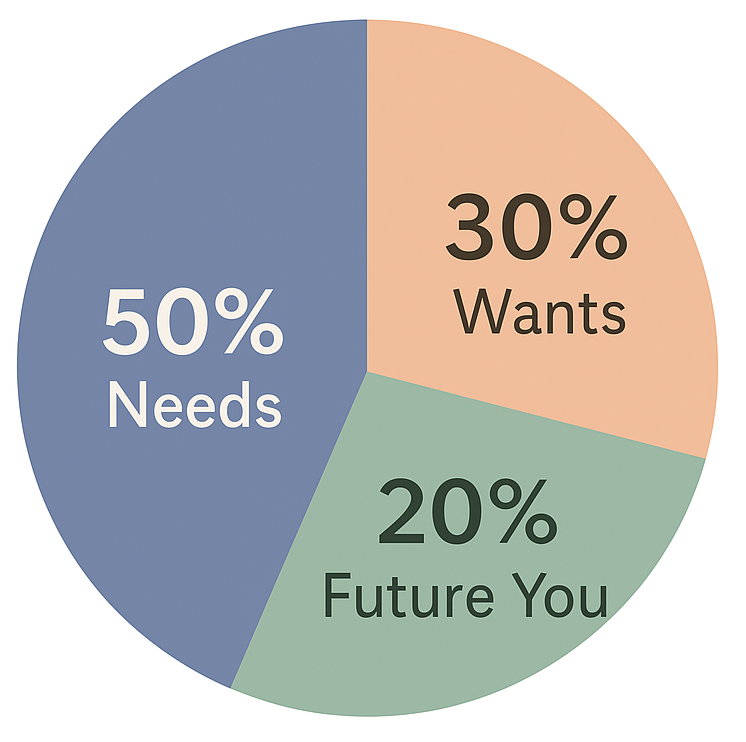
Break your spending into three buckets:
- Needs: Essentials to live (housing, food, transport)
- Wants: Joyful extras (coffee, books, nights out)
- Future You: Savings, debt repayments, investments
You might have heard of the 50/30/20 rule (50% for needs, 30% for wants, 20% for savings or debt). It’s a helpful starting point—but feel free to adapt it to your life.
Step 5: Adjust and Review Weekly or Monthly
Check in regularly. Your budget isn’t set in stone—it should evolve with you. Life happens. Unexpected costs pop up. That’s normal.
Want a gentle place to start? Use our Budget Template to guide you.
Common Budgeting Myths to Unlearn
Let’s unlearn some unhelpful ideas:
- “Budgeting means cutting out fun”
Nope. A healthy budget makes space for joy on purpose. - “You have to track every penny”
You don’t. Awareness matters more than perfection. - “If it doesn’t work instantly, you’ve failed”
Budgeting is a practice, not a performance. You’re allowed to iterate.
Tips to Make Your Budget Stick
A few ways to make budgeting feel easier (and maybe even enjoyable):
- Automate what you can. Set up direct debits for savings or bills.
- Review weekly with curiosity. Ask “What surprised me?” not “What did I mess up?”
- Add visual cues. A post-it reminder, a phone widget, or a colour-coded tracker can go a long way.
Tools to Help You Get Started
- Use our free Budget Template to build your first draft
- Reflect with the Money Reset Toolkit if budgeting brings up anxiety or resistance
Your budget should feel like a supportive co-pilot, not a strict teacher. It’s allowed to be flexible. It’s allowed to include fun. It’s allowed to take time to figure out.
And you? You’re allowed to learn as you go. There is no “perfect budget,” only one that works for you.
Ready to try? Check out the Money Reset Toolkit to take your next step.