

If your job is draining your energy, hurting your health, or crushing your confidence, you’re not being dramatic — you’re in a toxic environment. And if you’re asking, “How can I afford to leave?” — this guide is for you.
This is not a reckless quit-your-job manifesto. It’s a steady, shame-free roadmap to help you create financial breathing room so you can walk away with clarity and confidence when the time is right.
Step 1: Know What You’re Working Toward
Before you can plan your exit, define what you’re aiming for.
Ask yourself:
- Do I need a break (sabbatical, rest period)?
- Am I looking for a healthier 9–5 elsewhere?
- Do I want to pivot to freelance or self-employment?
Each goal has different financial needs. Start by calculating your monthly essentials — the minimum amount you need to cover rent, bills, food, and transport.
🛠️ Use a budgeting tool like Emma to review your last 3 months of spending and get a clear average. Don’t worry about being perfect — the goal is clarity, not control.
Target Buffer Ideas:
- 1 month of expenses = breathing room
- 3 months = job search with less stress
- 6+ months = room to pivot or freelance
Step 2: Create a Protected Escape Fund
This is your financial parachute — and it doesn’t need to be huge to make a difference.
Open a separate account (not your main current account) to hold this money. You want it out of sight and emotionally protected.
Good options:
- Wise: sub-accounts in different currencies, easy to name pots
- Monzo Pots: lets you name and lock funds
- A separate savings account at your current bank
Name it something empowering:
- “Job Freedom Fund”
- “Mental Health Buffer”
- “Rest > Resentment”
Saving just £10–£50/week can add up — and it reinforces your exit as a serious, doable plan.
Step 3: Cut Any Unnecessary Financial Pressure
Look at your regular spending and ask: What can I pause to create space?
Use apps like Emma or Snoop to:
- Spot forgotten subscriptions
- Review direct debits
- Flag rising bills
Table: What to Pause vs. What to Keep
| Pause (Temporary) | Keep (Protect Your Energy) |
|---|---|
| Extra subscriptions | Therapy/support |
| Meal boxes | Grocery delivery (if it helps you cope) |
| Paid apps or courses | Budget tools (if they reduce stress) |
This isn’t about deprivation — it’s about temporary trade-offs while you stabilise.
Step 4: Make Extra Money (If You Can — Gently)
This is optional. If you’re already burned out, rest is productive.
If you do have energy or time:
- Freelance (writing, design, admin, tutoring)
- Sell things you no longer use
- Complete small surveys or microtasks online
Important: Avoid hustle culture here. A few hundred pounds can be enough to extend your runway — you don’t need to earn a second income.
📎 GOV.UK: Check if you can claim benefits
Step 5: Plan the Exit (And What Comes After)
Give yourself a loose timeline — not to pressure yourself, but to feel progress.
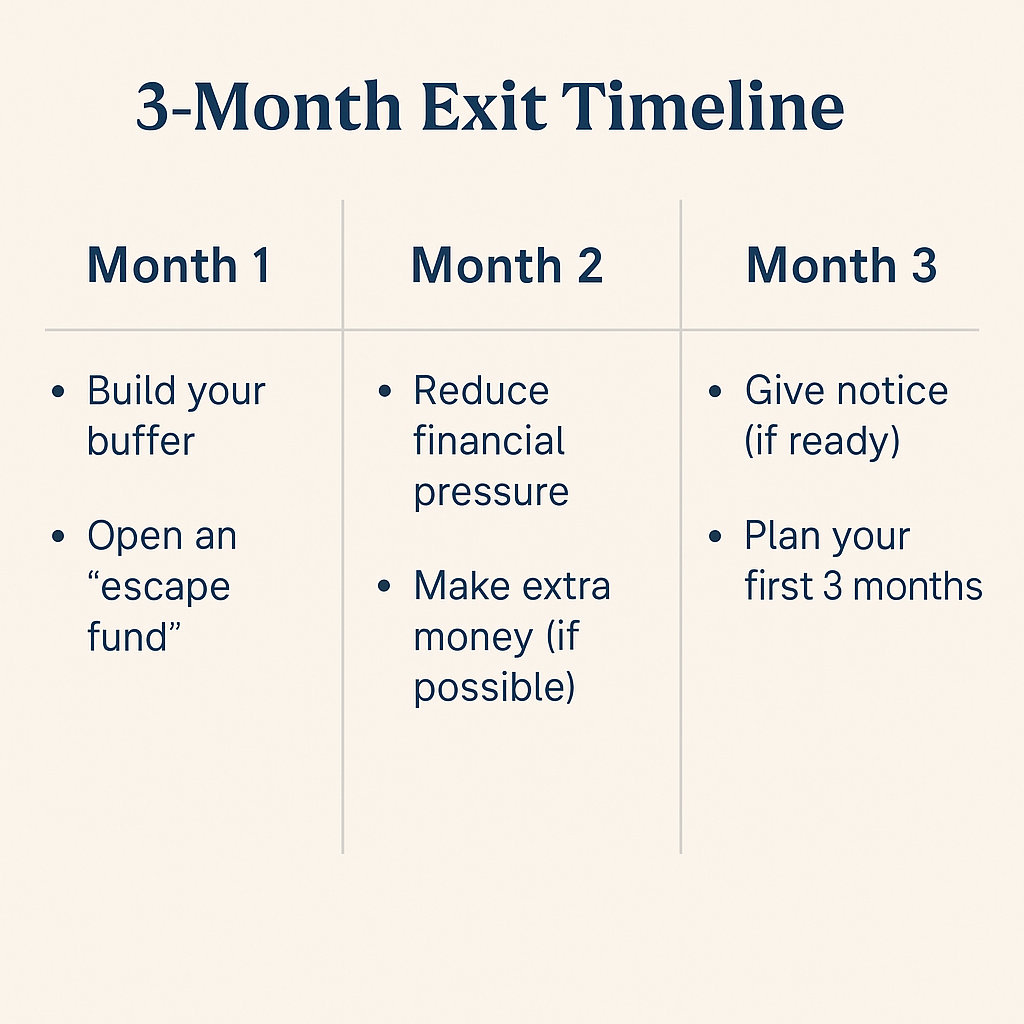
Example Timeline:
- Month 1: Open your escape fund, calculate your budget, pause extras
- Month 2: Add savings, reduce pressure, explore next steps
- Month 3: Set a notice date, prep for transition
Also plan your first 3 months after leaving:
- Will you claim benefits or Universal Credit?
- Do you have freelance or temp options?
- Who can support you emotionally?
Optional: Create a “money map” of what your next 12 weeks might look like.
📎 Citizens Advice: Leaving your job
Step 6: Know Your Rights (If It’s Truly Toxic)
If you’re experiencing harassment, discrimination, or unfair treatment, you may have legal options.
- Document everything: emails, messages, meeting notes
- Speak to HR (if safe)
- Get advice from:
You might not need to take formal action — but knowing your rights helps you feel less powerless.
Final Thoughts: Your Exit Is a Power Move, Not a Failure
Leaving a toxic job isn’t quitting — it’s choosing yourself.
You deserve safety, clarity, and a life where you’re not counting down the hours until the weekend. And while money might feel like a barrier, this plan gives you a way forward.
It won’t happen overnight. But week by week, your freedom fund will grow — and so will your confidence.
Your next step?
- Set up a separate account
- Calculate your essentials
- Make your first transfer (even £5)
You don’t need everything sorted to start — you just need a plan that honours where you are and where you want to go.