

What Money Shame Feels Like
Money shame isn’t just a vague feeling—it’s a weight. It’s the tight knot in your stomach when you open your banking app. It’s the voice in your head that says, “I should have known better,” or “Everyone else has this figured out but me.”
It might sound like:
- “I’m so behind—I’ll never catch up.”
- “I always mess up my finances.”
- “If I were smarter, I wouldn’t be in this position.”
Money shame can show up as guilt, secrecy, comparison, or total shutdown. It’s isolating. But it’s also incredibly common.
Because money isn’t just about maths. It’s emotional. It’s tied to safety, identity, and belonging. So if you feel overwhelmed, ashamed, or avoidant—there is nothing wrong with you. This is a human response to a complex system.
Why It’s So Common
Money shame doesn’t come out of nowhere. It’s usually something we’ve inherited, absorbed, or learned over time.
Some common sources:
- Upbringing: Were you told money was a taboo topic? Did your family fight about it, or avoid it altogether?
- Education gaps: Many of us were never taught how to manage money—and then blamed for not knowing.
- Cultural messages: Hustle culture, shame-based budgeting advice, or the myth that success equals self-worth.
- Social media comparison: Seeing curated versions of other people’s lives can trigger deep feelings of inadequacy.
How Shame Shapes Our Financial Habits
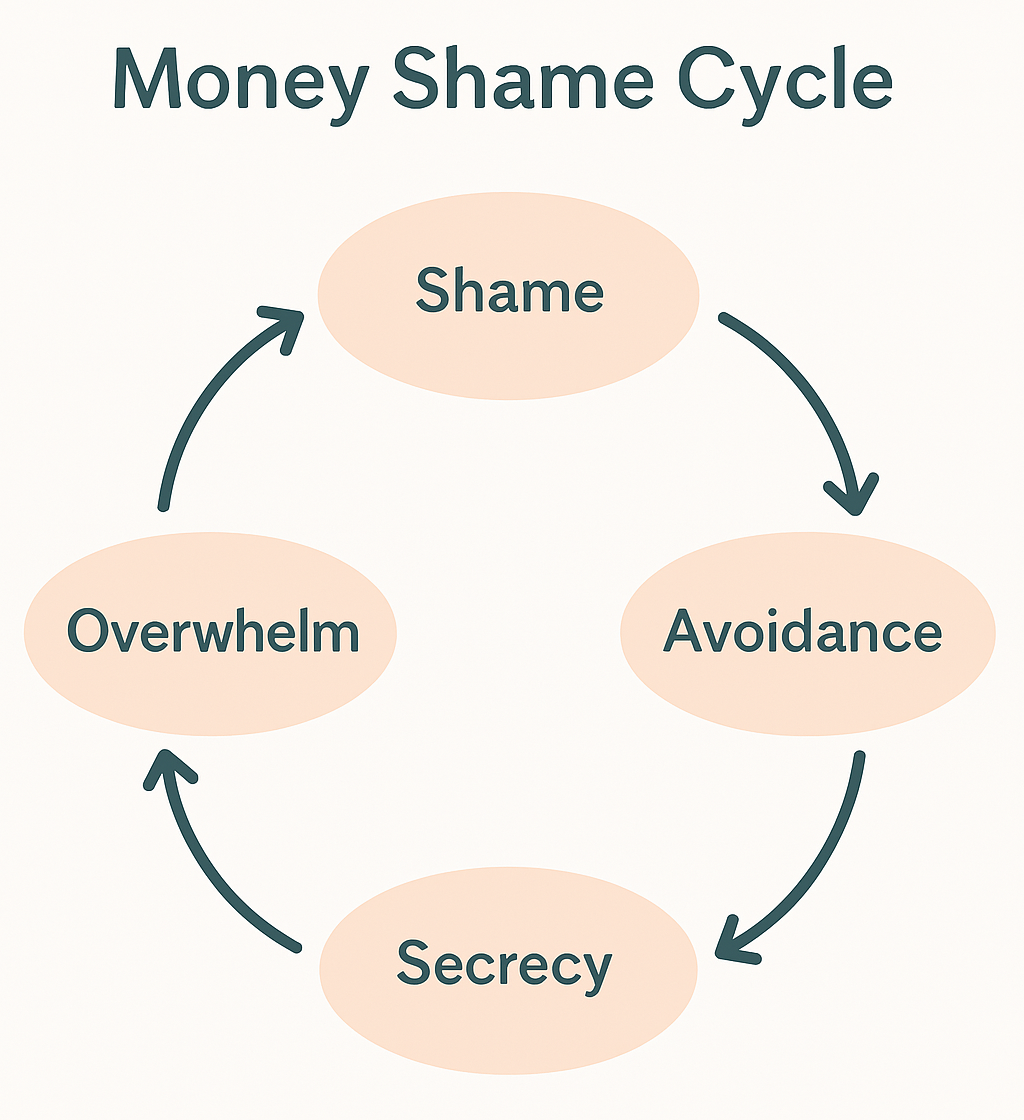
Shame doesn’t just live in your head—it shows up in your behaviours, too. Sometimes without us even realising.
Common patterns include:
- Avoidance: Not opening your bank app, ignoring bills, procrastinating on financial tasks
- Secrecy: Hiding purchases, underreporting debt, not talking about money with partners or friends
- Freeze/flight responses: Feeling stuck, overwhelmed, or unable to take action—even when you want to
- Overcompensating: Overspending to prove you’re “doing fine,” or under-earning because you don’t believe you deserve more
These aren’t character flaws. They’re coping strategies. And once we see them clearly, we can begin to gently shift them.
Steps Toward Healing
Healing from money shame isn’t about being perfectly disciplined—it’s about understanding your patterns and building new habits, one step at a time.
Here’s a practical, five-step starting point:
- Recognise the trigger. Begin noticing what situations or thoughts tend to spark money shame. Is it checking your balance? Comparing yourself online? Identifying these patterns helps create space to respond differently.
- Reframe your thoughts. When the inner critic shows up, pause and challenge it. Ask yourself: Would I speak this way to a friend? Replace harsh self-talk with something neutral or kind.
- Do a values check-in. Consider: What actually matters to me financially right now? This brings the focus back to your own goals instead of external pressure.
- Make one small decision. Shame thrives in inaction. Choose one low-pressure task: open your banking app, look at one bill, or rename your savings pot with something encouraging.
- Reflect and adjust. Journaling—even briefly—can help you track what worked, what didn’t, and what felt different. Try prompts like:
- What financial message do I want to unlearn?
- How did I show up for myself today?
You don’t have to get it perfect—just keep coming back to awareness and self-respect.
You can also explore the Money Reset Toolkit for more journaling prompts and practical tools.
Finding Safe Ways to Talk About Money
Shame shrinks when it’s spoken out loud—in safe spaces.
Some places to start:
- Journaling: Writing honestly can help you process feelings without pressure.
- Therapy or coaching: Especially with someone trained in financial trauma or emotional wellbeing.
- Supportive friendships: Try sharing one small money truth with someone you trust.
- Online communities: Safe, shame-free spaces do exist. Seek out groups that value honesty over hustle.
You might also find helpful resources at the Money and Mental Health Policy Institute, Mind UK, or the Financial Therapy Association.
Moving Forward With Self-Compassion
Shame loves silence and speed. Compassion needs space and slowness.
This isn’t about being endlessly positive or pretending everything’s okay. It’s about choosing honesty over harshness—and making room for your full humanity in your money life.
You are not broken. You are not behind. You are not alone. Money shame loses its power when we meet it with curiosity and care.
When you’re ready, the Money Reset Toolkit can guide your next move toward clarity, care, and confidence.