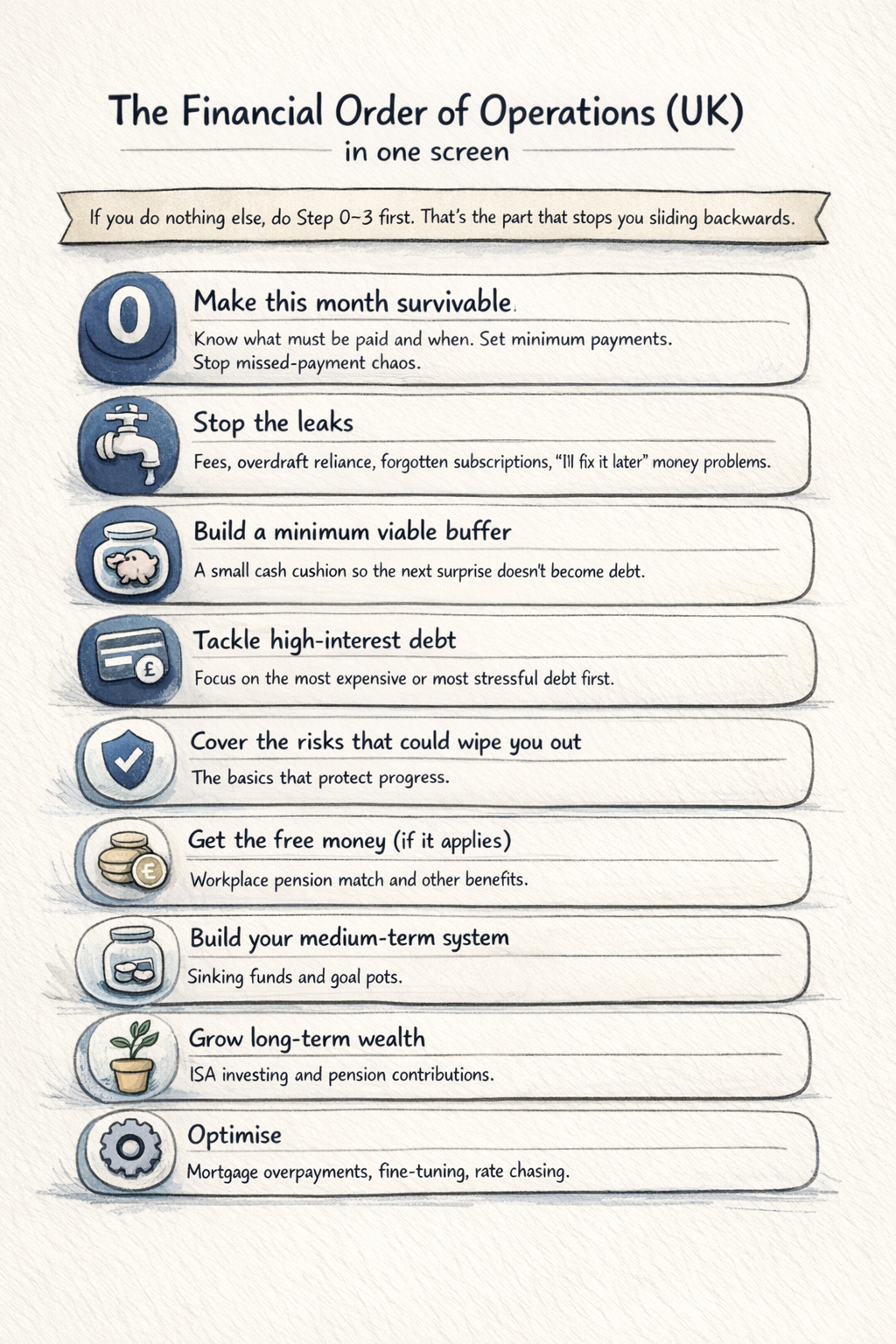

If your finances feel like a messy pile of “shoulds”, this is for you. The financial order of operations is simply a sensible sequence for what to tackle first, so you stop juggling ten priorities at once.
Key takeaway: stabilise your month first, then clear the expensive stuff, then build long-term wealth. Not because it’s morally superior. Because it reduces the chance you slide backwards.
What “financial order of operations” means
A financial order of operations is the order you tackle money priorities so you get the most stability for the least effort. It’s not a perfect formula. It’s a way to make decisions when everything feels urgent.
A few terms I’ll use:
- Buffer: cash that stops a wobble (a car repair, a higher bill, a slow work month) turning into debt.
- High-interest debt: debt that’s expensive enough to fight you every month.
- Sinking fund: savings for predictable costs you know are coming (car MOT, annual insurance, Christmas).
The UK financial order of operations (the default)
Think of this as the “default settings” version. Your life might need a slightly different order, and that’s normal. (If you’re self-employed, jump to the link further down.)
Step 0: Make this month survivable
Before you optimise anything, get your head above water.
- Know your essential bills and due dates
- Set up minimum payments so nothing is missed by accident
- If money is genuinely not covering essentials, focus on stabilising first (more on that below)
This step is boring. It also prevents a lot of expensive chaos.
Step 1: Stop the leaks
Leaky finances drain your energy and your cash.
- Late fees, penalty charges, overdraft fees
- Subscriptions you forgot about
- “It’s fine, I’ll deal with it later” money decisions that keep landing on your future self
If your bank account regularly dips into overdraft, stopping the leak often matters more than trying to “save harder”.
Step 2: Build a minimum viable buffer
This is the part most advice skips. But for most people, a small buffer is what stops the debt cycle.
Your first buffer doesn’t need to be six months of expenses. It needs to be enough that a surprise doesn’t instantly become borrowing.
A good starting question is: What’s the next annoying-but-likely expense that would otherwise go on a card? Aim for that amount first.
Step 3: Tackle high-interest debt
Once you’ve got a basic buffer, you can go after expensive debt without being knocked off course by one bad week.
- Focus on the debt that costs the most (or causes the most fees and stress)
- Keep the plan simple: one “focus debt” at a time tends to work better than spreading money thinly
- If you’re juggling multiple debts and feel frozen, you’re not alone. The goal is a plan you can actually keep going on a tired Tuesday.
Step 4: Cover the risks that could wipe you out
This step isn’t about being dramatic. It’s about protecting progress.
Depending on your situation, that might mean thinking about:
- What happens if you can’t work for a while?
- What happens if someone depends on your income?
- What would derail you most: illness, job loss, housing instability?
You don’t need every product under the sun. You do need to be honest about what a bad year would do to your finances.
Step 5: Get the “free money” (if it applies)
If you’re employed and have a workplace pension, this is where “free money” can show up via employer contributions.
It’s hard to beat. And it’s one of the few genuinely straightforward wins in personal finance.
Step 6: Build your medium-term system
Now you’re not firefighting, you can start making life easier.
- Sinking funds for predictable costs
- A simple goal pot (holiday, house deposit, moving costs)
- A monthly rhythm that doesn’t rely on willpower
This is where your finances start feeling less like a constant negotiation.
Step 7: Grow long-term wealth
Once the basics are steady, you can invest with fewer interruptions.
- ISA investing for long-term goals and flexibility
- Pension contributions beyond the basics (if that fits your priorities)
The important part is: investing works best when you don’t have to keep stopping.
That’s why the earlier steps matter.
Step 8: Optimise (only once the foundations are in)
Optimisation is where a lot of people start, because it feels productive.
But things like mortgage overpayments, rate-chasing, and fine-tuning contributions are most helpful when:
- your month is stable
- you have a buffer
- expensive debt is under control
What most advice misses about “the right order”
The point of an order of operations isn’t to squeeze the last 0.5% out of your finances.
It’s to reduce the chance of backsliding.
A plan that’s slightly “less optimal” on paper but easy to stick to will usually beat a perfect plan you abandon every time life gets loud.
Common questions
What if I can only do one thing right now?
Do the thing that makes next month easier, not harder. For many people that’s:
- stopping fees and missed payments, or
- building a small buffer, or
- simplifying an overcomplicated setup you avoid looking at
Is it ever OK to invest while I have debt?
Sometimes, yes. But if debt is expensive and your month is fragile, investing often gets interrupted, and interruptions can cost more than people realise.
How big should my emergency fund be in the UK?
Start with a minimum viable buffer first. Then build from there based on job stability, dependants, health, housing, and how easy it would be to replace your income.