
We All Want the Secret
Let’s be honest. Most of us have typed how to get rich into Google, even if just out of curiosity.
We’ve clicked on YouTube videos promising “How I Made £100K in 3 Months” or saved TikToks claiming to reveal the one thing schools never taught us about money. And we’ve all wondered — is there something they know that I don’t?
The search for a secret to getting rich is universal. Especially if you didn’t grow up talking about money, it can feel like there’s some hidden knowledge keeping you on the outside.
But here’s what I wish someone told me sooner:
The secret to building wealth isn’t a secret.
It’s not hidden in an algorithm or a spreadsheet. It’s simple. Sometimes boring. Often unsexy. But it works — and it’s available to you right now.
Why We Resist Simple Truths
Think about dieting. Most people know the basics — eat more whole foods, move your body, drink water, get rest. But instead, we try extreme plans and quick fixes, because the basics feel… too basic.
Money works the same way.
We try day trading, crypto, and complicated spreadsheets. We fall down rabbit holes of advice, convinced that if we just found the right investment or app or passive income trick, everything would click.
But the truth is, we often avoid the simple things because they’re slow, they require patience, and — let’s be real — they don’t make anyone rich overnight.
Still, when you look at what actually works across generations and income levels, the formula doesn’t change.
What Actually Works: The Wealth Basics
The foundations of wealth are surprisingly consistent: spend less than you earn, invest the difference, and keep going — for longer than feels exciting.
That’s it.
It sounds too simple to be effective, but that’s exactly why it works. Over time, your money grows — and the returns start earning their own returns. That’s compound interest. It’s not flashy, but it’s financial rocket fuel.
Say you invest just £100 a month into a low-cost index fund. Even with modest growth, in 30 years, you could have over £120,000. Not because you did anything fancy, but because you did something consistently.
📌 New to this? Check out our Beginner’s Guide to Compound Interest.
The Advantage Money Has Over Dieting
Here’s where money has a leg up on health goals: you can automate it.
With dieting or fitness, you have to make dozens of micro-decisions every day. But with money? You can set up a system once, and it’ll quietly run in the background.
That could look like setting up a direct debit to your savings account on payday, using an app like Emma to track spending, or letting an auto-investing platform like Nutmeg do the heavy lifting.
Willpower isn’t your problem. System design is.
Once the structure is in place, your progress continues even when life gets chaotic — even when you’re tired, stressed, or distracted.
If It’s So Simple, Why Don’t We All Do It?
The short answer? Because we’re human.
Many of us grew up with the belief that rich people are either geniuses, incredibly lucky, or just “born into it.” So when we’re not seeing results fast, it’s easy to think we’re missing something — or that we’ve already failed.
There’s also shame. Guilt around past decisions. Fear of doing it wrong. And let’s not forget the sheer overwhelm of too many options — platforms, accounts, advice columns. Sometimes it’s easier to shut down and do nothing.
But here’s the thing: you’re not behind. You’re not bad with money. You’re just unlearning old stories. And that’s something worth celebrating.
Reframing What It Means to Be ‘Advanced’ with Money
In online finance spaces, “advanced” often looks like people talking about asset classes, leveraging debt, or buying a second property.
But that’s not what real financial confidence looks like for most people.
Being advanced means having the emotional maturity to keep doing the simple stuff — even when it’s not exciting. It’s setting up the right systems and sticking with them. It’s saying no to lifestyle inflation, trusting your process, and ignoring the noise.
Some of the most successful wealth builders aren’t loud. They’re not wearing luxury brands or talking about their portfolio at brunch. They’re quietly investing every month, living below their means, and letting time do the heavy lifting.
If you’re doing that? You’re already ahead.
📖 Want a reality check on what actually builds wealth? Morgan Housel’s The Psychology of Money is a brilliant place to start.
How to Start Today (Without Making It a Whole Thing)
Here’s the simplest way to begin: get curious about your current habits.
- Start by noticing where your money goes. Not to restrict — but to understand. Awareness is the most underrated financial tool there is.
- Then, look for ways to create a small gap between what comes in and what goes out. That gap is your wealth-builder. Even if it’s just £10 or £25 a month, that’s enough to begin.
- Once you’ve found that gap, automate it. Set up a direct debit or standing order that moves money as soon as you’re paid. Consider putting it into a high-interest savings account or a beginner-friendly investing platform.
- And then — the hardest part — let time do its thing.
You don’t need to check your account every day. You don’t need to know everything. You just need to trust that showing up consistently beats showing up perfectly.
Final Thought: Stop Searching for Secrets, Start Building
You don’t need to be smarter. Or luckier. Or someone with a high-paying job and perfect budgeting habits.
You just need to start.
You already have the tools to build wealth — even if no one ever taught you how. No shame if this is all new to you. What matters most is that you’re here, now, and you’re choosing to begin.
💡 Ready to take the next step without the overwhelm?
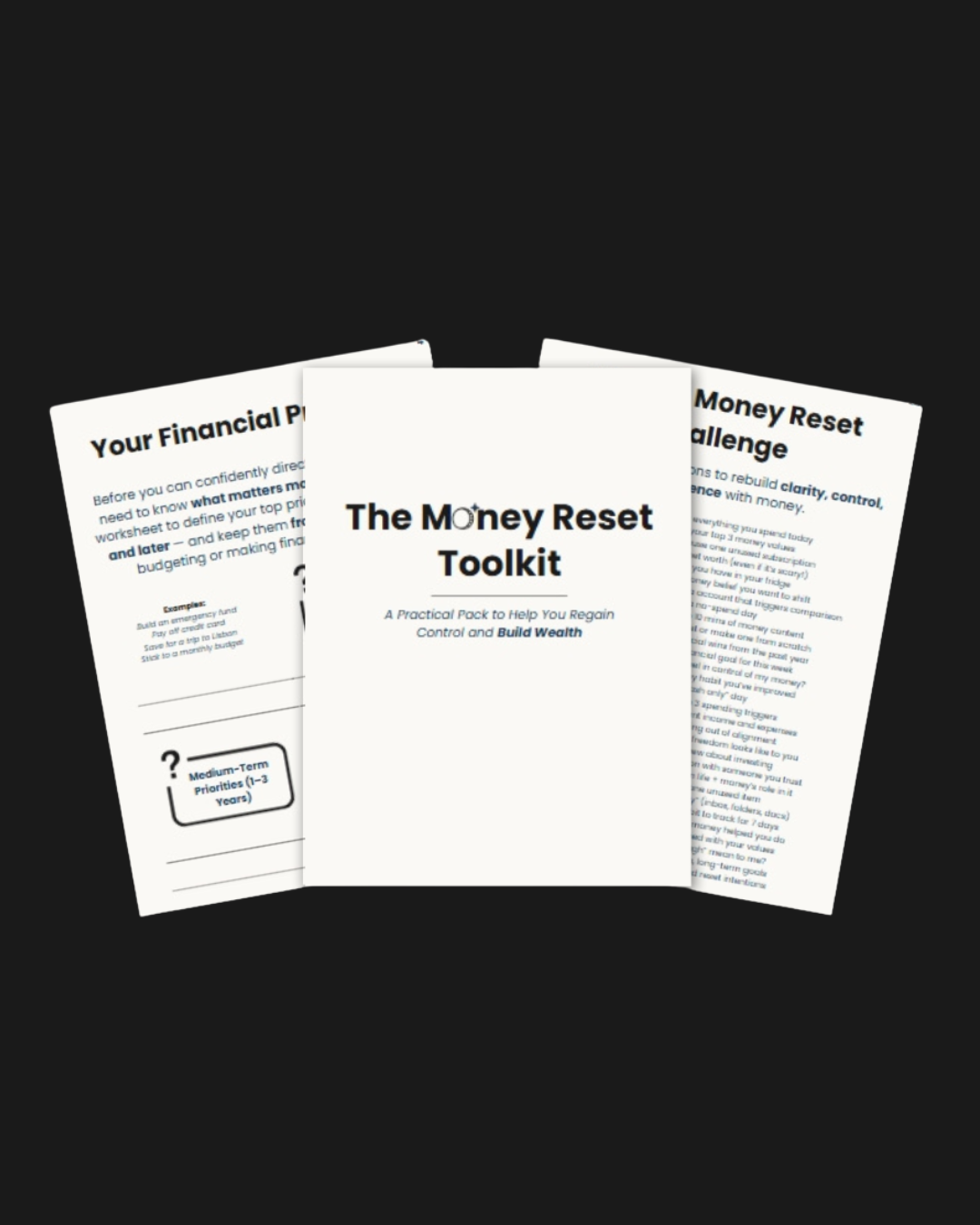
Download our Money Reset Toolkit — a gentle, judgment-free guide to building financial systems that actually work for real life.
T